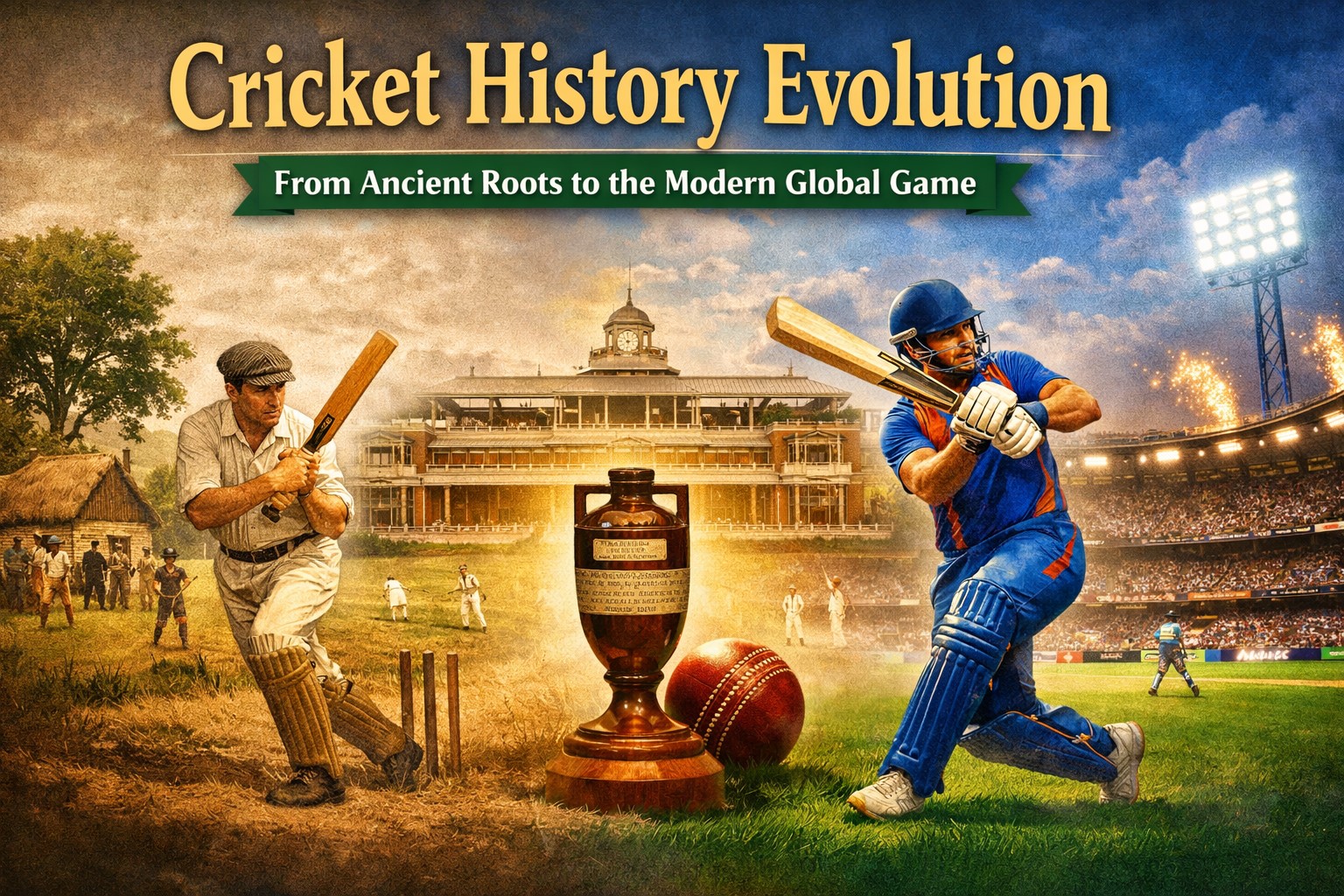
Cricket History Evolution
Introduction
Cricket is one of the oldest and most fascinating sports in the world, with a history that stretches back several centuries and reflects social, cultural, and technological changes across different eras. What began as a simple rural pastime in England gradually transformed into a highly organized international sport that is followed passionately by millions of fans worldwide. The evolution of cricket is not just about changes in rules or formats, but also about the emergence of legendary players, unforgettable matches, and the expansion of the game into new regions. Today, cricket represents a blend of tradition and innovation, where Test matches coexist with fast-paced T20 games, creating a dynamic sporting landscape that continues to evolve with time.
Early Origins of Cricket
The Birth of Cricket in England
Cricket is widely believed to have originated in the southeastern parts of England during the 16th century, where it was initially played by children using rudimentary equipment such as wooden sticks and handmade balls in open fields. Over time, adults began to take interest in the game, and it slowly developed into a more structured recreational activity played in villages and towns. By the 17th century, cricket had gained enough popularity to be recognized as a common sport, and matches were often played between neighboring communities, sometimes even attracting spectators and informal betting.
Development of Rules and Structure
As cricket grew in popularity during the 18th century, there was a need to formalize its rules and create a standardized way of playing the game, which led to the establishment of the Marylebone Cricket Club in 1787, an institution that would go on to define and maintain the Laws of Cricket for generations. During this period, several important developments took place, including the introduction of the straight bat, the standardization of the pitch length to 22 yards, and the formation of county teams that competed in organized matches, thereby laying the groundwork for professional cricket and ensuring consistency in gameplay across different regions.
Expansion of Cricket Across the World
Colonial Influence and Global Spread
The spread of cricket beyond England was largely driven by British colonial expansion, as the game was introduced to various parts of the world including India, Australia, South Africa, and the West Indies, where it quickly gained popularity among locals and became an integral part of their sporting culture. Each of these regions adopted cricket in its own unique way, contributing different playing styles, techniques, and strategies that enriched the global character of the sport and helped it grow into a truly international game with diverse influences.
First International Matches
The history of international cricket began with the first recorded match between United States and Canada in 1844, which marked an important milestone in the evolution of the sport beyond domestic boundaries, although it was the first official Test match played in 1877 between England and Australia that truly established cricket as a competitive international sport and set the stage for future rivalries and tournaments that would capture global attention.
Evolution of Cricket Formats
Test Cricket: The Ultimate Challenge
Test cricket, considered the purest and most traditional form of the game, represents the highest level of skill, patience, and endurance, as matches are played over five days and require players to perform consistently under varying conditions. The iconic rivalry between England and Australia led to the creation of The Ashes, a historic series that has produced some of the most memorable moments in cricket history and continues to be one of the most prestigious contests in the sport, showcasing the depth and resilience of players across generations.
One Day Internationals (ODIs)
The introduction of One Day Internationals in the 1970s marked a significant turning point in cricket evolution, as the format was designed to produce results within a single day and make the game more appealing to a broader audience, leading to the establishment of the Cricket World Cup in 1975, which quickly became one of the most celebrated tournaments in the sporting world and provided a platform for teams to compete on a global stage with limited overs, creating thrilling and unpredictable matches.
T20 Cricket: The Modern Revolution
The arrival of Twenty20 cricket in the early 21st century revolutionized the sport by introducing a shorter, more dynamic format that emphasizes aggressive batting, innovative bowling, and fast-paced action, making it highly attractive to modern audiences and television viewers, while leagues such as the Indian Premier League have played a crucial role in popularizing the format by combining entertainment with high-level competition and bringing together players from different countries to participate in franchise-based tournaments.
Legendary Players and Their Impact
Early Legends
The history of cricket would be incomplete without mentioning legendary figures like Don Bradman, whose extraordinary batting average of 99.94 remains one of the greatest achievements in any sport and serves as a benchmark for excellence that has inspired countless cricketers over the decades, demonstrating the impact a single player can have on the legacy of the game.
Modern-Day Icons
In the modern era, players such as Sachin Tendulkar, Ricky Ponting, and Jacques Kallis have left an indelible mark on cricket through their remarkable consistency, leadership, and ability to perform under pressure, with achievements like Tendulkar’s 100 international centuries and Ponting’s multiple World Cup victories highlighting their contributions to the sport’s growth and global popularity.
New Generation Stars
The evolution of cricket continues with emerging stars such as Babar Azam and Joe Root, who represent the future of the game and are redefining modern cricket with their skill, adaptability, and commitment to excellence across different formats, ensuring that the sport remains competitive and exciting for fans around the world.
Important Matches That Shaped Cricket History
1983 World Cup Final
The 1983 Cricket World Cup final stands as one of the most transformative moments in cricket history, as India, led by Kapil Dev, defeated the dominant West Indies team to win their first World Cup, an achievement that not only elevated the status of Indian cricket but also inspired a new generation of players and fans, ultimately contributing to the sport’s immense popularity in the country.
2005 Ashes Series
The 2005 Ashes series between England and Australia is widely regarded as one of the greatest Test series ever played, featuring intense competition, dramatic finishes, and exceptional individual performances that captured the imagination of cricket fans worldwide and revitalized interest in the longest format of the game.
2019 World Cup Final
The 2019 ICC Cricket World Cup final between England and New Zealand provided one of the most thrilling conclusions in cricket history, as the match ended in a tie and was decided by a super over, highlighting the unpredictable nature of the sport and showcasing the excitement that modern cricket can deliver.
Records and Statistics in Cricket Evolution
Batting Records
Batting records have always been a key aspect of cricket history, with players like Sachin Tendulkar holding the record for the most international runs and Don Bradman maintaining the highest batting average, while modern players such as AB de Villiers have set records for the fastest centuries, demonstrating the changing nature of batting techniques across different eras.
Bowling Records
Bowling achievements have also played a crucial role in defining cricket excellence, with Muttiah Muralitharan holding the record for the most wickets in international cricket and Anil Kumble achieving the rare feat of taking all ten wickets in a single innings, showcasing the impact of bowlers in shaping match outcomes.
All-Round Excellence
All-rounders such as Imran Khan and Kapil Dev have contributed significantly to cricket evolution by excelling in both batting and bowling, proving that versatility and balance are valuable assets in the game and often play a decisive role in team success.
Technological Advancements in Cricket
Decision Review System (DRS)
The introduction of the Decision Review System has transformed cricket by allowing teams to challenge on-field umpiring decisions using advanced technologies such as ball tracking and edge detection, thereby improving the accuracy of decisions and reducing controversies, while also adding a strategic element to the game as teams must use their reviews wisely.
Broadcasting and Data Analytics
Modern broadcasting techniques, including high-definition cameras, slow-motion replays, and real-time statistics, have enhanced the viewing experience for fans, while data analytics has become an integral part of team strategies, helping players and coaches analyze performance, identify weaknesses, and develop game plans based on detailed insights.
Women’s Cricket Evolution
Women’s cricket has experienced significant growth over the years, with increased investment, better infrastructure, and greater media coverage contributing to its rising popularity, as players like Mithali Raj and Ellyse Perry have achieved remarkable success and inspired young girls to pursue cricket as a professional career, while international tournaments and domestic leagues continue to provide opportunities for female cricketers to showcase their talent on a global stage.
Commercialization of Cricket
Rise of Franchise Leagues
The commercialization of cricket has been driven largely by the success of franchise-based leagues such as the Indian Premier League, which have revolutionized the sport by combining entertainment, marketing, and high-quality competition, attracting global audiences and generating substantial revenue for players, teams, and governing bodies.
Sponsorships and Media Rights
The growth of cricket has also been fueled by lucrative sponsorship deals and broadcasting rights, which have turned the sport into a major industry and enabled cricket boards to invest in infrastructure, grassroots development, and player welfare, ensuring the continued expansion and sustainability of the game.
Challenges and Controversies
Despite its success, cricket has faced several challenges over the years, including issues related to match-fixing, corruption, player workload, and the balance between traditional and modern formats, requiring governing bodies to implement strict regulations and ethical guidelines to preserve the integrity of the sport and maintain public trust.
The Future of Cricket
The future of cricket looks promising as the sport continues to evolve with innovations in format, technology, and global outreach, with efforts being made to expand cricket into new markets such as the United States and other emerging regions, while the potential inclusion of cricket in international multi-sport events could further enhance its global appeal and introduce the game to new audiences.
Conclusion
The evolution of cricket is a testament to its enduring appeal and adaptability, as it has grown from a simple village game into a global sport that unites people across cultures and continents, with its rich history, legendary players, iconic matches, and continuous innovation ensuring that cricket remains one of the most beloved and exciting sports in the world, while its future promises even greater opportunities for growth and development.
FAQs
What is the origin of cricket?
Cricket originated in England during the 16th century and gradually developed into an organized sport with formal rules and international competitions.
What are the main formats of cricket?
The three main formats of cricket are Test matches, One Day Internationals, and Twenty20, each offering a different style and pace of gameplay.
Who is the greatest cricketer in history?
Many consider Don Bradman the greatest cricketer due to his exceptional batting average and unmatched records.
How has cricket evolved over time?
Cricket has evolved through changes in rules, formats, technology, and global participation, making it more accessible and entertaining for modern audiences.
Why is T20 cricket so popular?
T20 cricket is popular because it is fast-paced, entertaining, and suitable for modern lifestyles, attracting a wide range of fans worldwide.
What is the future of cricket?
The future of cricket includes global expansion, technological advancements, and the continued growth of franchise leagues, ensuring the sport remains dynamic and relevant.
About the Author